A cluster of foam sitting at the water's surface looks like a malfunction. First-time betta owners often skim it off, assuming something is wrong with the tank. It is, in fact, one of the clearest signs of a healthy, settled male betta doing exactly what his biology expects of him.
What the nest actually is
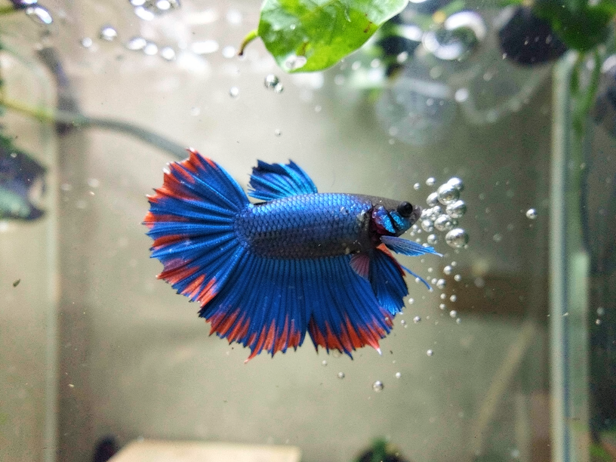
A bubble nest is built by the male betta using mucus-coated air bubbles blown from his mouth and arranged, one by one, into a raft at the surface. The mucus coating keeps each bubble intact far longer than a plain air bubble would last. In the wild, the nest sits under a broad leaf or an overhanging bank where surface disturbance is low. In a tank, the male picks the quietest corner, often near a floating plant or the edge of the lid.
The nest is a nursery, not a decoration. After spawning, the female's eggs sink. The male catches them in his mouth and places them inside the bubble cluster, where they stay oxygenated and protected until they hatch, typically within 24 to 48 hours. He then guards the nest aggressively, catching any fry that fall out and returning them until they are free-swimming. The female plays no role in this phase; in most cases the male will drive her away.
![Betta Fish Bubble Nesting]()
Betta Fish Bubble Nesting
Image credit : AI
I'm watching this male betta build a bubble nest, a fascinating display of his natural behavior.
Why he builds one even without a female present
A male betta in a single-species tank, with no female anywhere in sight, will still build bubble nests regularly. This is because the trigger is hormonal and environmental, not social. Stable water temperature, good water quality, a comfortable photoperiod, and a sense of territory are enough. The male does not need to have seen a female to begin. Some males build constantly; others build rarely. Both are normal.
The size and density of the nest varies by individual. A male in peak condition with high reproductive drive may build a thick, layered raft several centimetres across. A younger or older male, or one recently moved to a new tank, may produce a loose scatter of bubbles. Neither is a reliable indicator of fertility on its own.
What it tells you about his wellbeing
Bubble nest building is a reasonable proxy for comfort, not a guarantee of health. A male who builds regularly is telling you that his water parameters are stable, his temperature is in range, he feels secure in his territory, and he is not under chronic stress. It is one data point among several.
Conversely, a male who has stopped building entirely, especially one who was building before, is worth watching. Sudden cessation can follow a water quality drop, a temperature swing, an illness, or persistent harassment from a tankmate. It is not a diagnosis, but it is a reason to check ammonia, nitrite, nitrate, and temperature before assuming all is well. A betta who is lethargic, off food, clamping his fins, or sitting at the bottom is showing you something more urgent than a missing nest.
![Serene Betta Tank Corner]()
Serene Betta Tank Corner
Image credit : AI
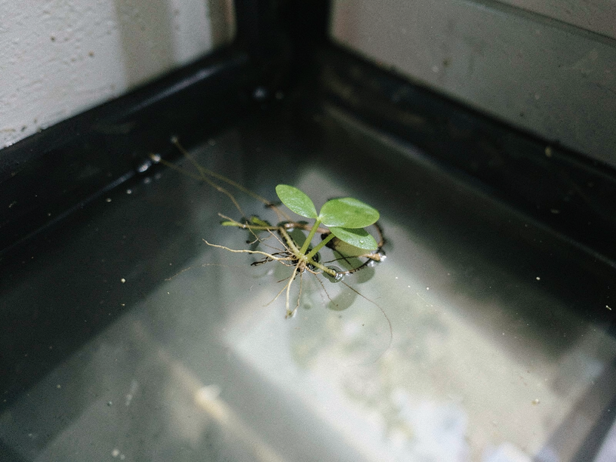
Observing the calm water surface, I wonder about the betta's behavior and if a bubble nest will form.
How to support the behaviour without disrupting it
The main enemy of a bubble nest is surface agitation. A filter outlet or air stone that breaks the surface constantly will destroy a nest faster than the male can build it. Bettas are labyrinth fish, they breathe atmospheric air directly, so some surface access is essential, but the flow can usually be baffled or redirected to one side of the tank, leaving a calmer area where the male can build undisturbed.
Floating plants help. Indian fern, water lettuce, or even a few stems of hornwort near the surface give the male an anchor point and reduce the area he needs to defend. A tight-fitting lid matters too: bettas are sensitive to cold air drafts, and a lid keeps the layer of air just above the water warm and humid, which makes bubble maintenance easier.
If you want to watch the behaviour closely, introduce a small mirror to the glass for two or three minutes. The male will flare at his reflection and often builds or repairs the nest shortly after, responding to the perceived presence of a rival. Keep sessions short, sustained flaring is stressful.
A betta who builds, patrols his nest, and flares at his reflection with good fin extension is a betta who is doing well. The bubble nest is not a quirk to be cleaned away. It is the fish telling you, in the only language he has, that everything is in order.