
The Animal That Can Regrow Its Heart and Brain and Still Remember Everything
Anushka Tripathi | Feb 10, 2026, 18:00 IST

Axolotl
Image credit : Pexels
The axolotl, a rare aquatic salamander from Mexico, challenges everything we know about healing. Capable of regenerating its heart, brain, spinal cord, and limbs without scars or memory loss, this extraordinary animal has become a beacon of hope for modern medicine. By unlocking the secrets of its regenerative cells, scientists believe axolotls may one day help humans heal heart damage, brain injuries, and spinal trauma. More than a biological wonder, the axolotl is a living lesson in resilience, renewal, and possibility.
There are moments in science that feel less like discovery and more like disbelief. Imagine losing a part of your heart and watching it grow back. Imagine damage to the brain repairing itself without scars, surgery, or therapy. For humans, this sounds impossible. For one extraordinary animal, it is simply life. Hidden beneath calm waters lives a creature that defies everything we know about injury, healing, and survival. This animal does not just recover. It regenerates. Completely. Perfectly. And without memory loss. This is the story of the animal that can regrow its heart and brain, and why it might hold answers humanity has been chasing for centuries.
Meet The Regeneration Miracle Of Natur
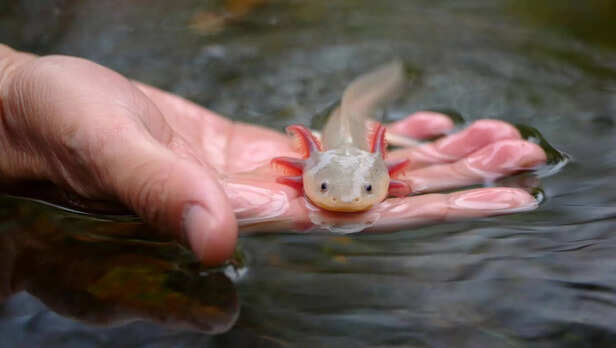
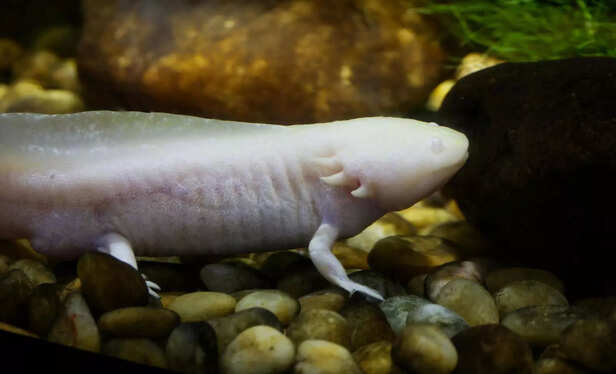
The animal at the center of this mystery is the axolotl, a small aquatic salamander native to Mexico. At first glance, the axolotl looks almost unreal. A soft smiling face, feathery external gills, and gentle eyes give it an almost cartoon-like innocence. But beneath this adorable appearance lies one of the most powerful biological abilities on Earth.
Axolotls can regenerate their heart, brain tissue, spinal cord, limbs, lungs and even parts of their eyes. If a piece of their heart is damaged, it grows back fully functional. If sections of their brain are injured, they regenerate without losing memories or behavior. No scars. No complications. Just renewal. For scientists, the axolotl is not just an animal. It is a living blueprint of healing.
How The Axolotl Regrows Its Heart
Heart damage in humans is permanent. Once the heart muscle dies, it is replaced by scar tissue that cannot pump blood. This is why heart attacks leave lifelong consequences. The axolotl breaks this rule entirely. When an axolotl’s heart is injured, the existing heart cells do something extraordinary. Instead of dying or becoming scars, they revert to a younger state. They divide. They multiply. They rebuild the damaged tissue cell by cell until the heart is whole again.
What makes this even more astonishing is that the regenerated heart works just as efficiently as before. There is no weakness. No reduced function. It is as if the injury never happened. This process is controlled, precise, and perfectly timed. The axolotl knows exactly how much tissue to regrow and when to stop. It does not overgrow. It does not malfunction. Nature performs surgery without tools.
The Brain That Refuses To Forget
Brain damage is one of humanity’s greatest fears. Memory, identity, and personality live inside delicate neural networks that, once damaged, are thought to be gone forever. The axolotl challenges this belief in the most emotional way possible. When parts of an axolotl’s brain are removed or damaged, the tissue regenerates. New neurons form. Neural connections rebuild. And most shockingly, the axolotl does not forget learned behaviors.
Scientists tested this by training axolotls to respond to specific signals. After damaging and regenerating parts of their brains, the axolotls still remembered what they had learned. The brain healed without erasing identity. This discovery reshaped how scientists think about memory storage. It suggests that memories are not fragile sparks easily lost, but resilient patterns that can survive regeneration.
Why Humans Lost This Power
One of the most haunting questions is not how axolotls regenerate, but why humans cannot. The answer lies deep in evolution. As humans evolved, our bodies prioritized speed over perfection. When injured, rapid wound closure reduces infection risk. Scar tissue formed quickly to seal the damage. This kept us alive but sacrificed regeneration.
Axolotls took a different path. They evolved in stable aquatic environments where slower healing did not mean death. Their bodies had time to rebuild rather than undergo rush repairs. In choosing survival efficiency, humans lost something magical. Axolotls kept it.
The Cellular Secret Behind Regeneration
Axolotl
Image credit : Pexels
Axolotl regeneration is powered by specialized cells that behave differently from human cells. When injury occurs, mature cells near the wound transform into flexible repair cells. These cells remember what they used to be and know what they need to become again.
They form a structure called a blastema, a mass of regenerative cells that acts like a biological construction site. The blastema follows genetic instructions that rebuild the exact missing structure in the correct size and position. There is no randomness. Every cell knows its role. For humans, this level of cellular coordination exists only in early embryonic development. Axolotls retain this ability throughout life.
The Emotional Intelligence Of Healing
What makes axolotl regeneration emotionally powerful is that it happens without distress. There is no panic. No shock. No prolonged suffering. After injury, axolotls continue eating, moving, and interacting normally. Healing is not dramatic. It is calm, quiet, and patient. This teaches us something profound. Healing does not always need urgency or fear. Sometimes the body heals best when allowed time and safety. In a world obsessed with quick fixes, the axolotl reminds us that restoration can be gentle.
A Species That Refuses To Grow Up
Another reason axolotls are unique is that they never fully grow up. They retain juvenile traits throughout their lives, including their regenerative abilities. This condition is called neoteny. Unlike other salamanders that mature and lose regenerative power, axolotls stay youthful at a cellular level. Their bodies remain flexible, adaptable, and open to repair. In humans, aging reduces regenerative capacity. Axolotls resist this decline. Youth, it seems, is not just about time. It is about cellular memory.
Why Scientists Are Obsessed With Axolotls
Researchers across the world study axolotls not out of curiosity alone, but in the hope. If humans could unlock even a fraction of this regenerative power, medicine would change forever. Heart attack recovery could be revolutionized. Spinal cord injuries might no longer mean paralysis. Brain trauma could heal without lifelong disability. Scientists are studying axolotl genes, immune responses and cellular behavior to understand how regeneration is allowed rather than blocked.
One of the biggest breakthroughs is understanding that axolotls suppress inflammation during healing. In humans, inflammation often causes further damage. Axolotls heal in a low-inflammation environment, allowing tissue to regrow cleanly.
The Tragedy Of A Miracle Species
Despite their incredible power, axolotls are critically endangered in the wild. Pollution, habitat destruction, and invasive species have pushed them to the edge of extinction. It is heartbreaking that a creature holding answers to human healing is disappearing because of human activity. Most axolotls today exist in laboratories and homes, far removed from their natural ecosystem. Saving axolotls is not just about conservation. It is about preserving knowledge written in living cells.
What Axolotls Teach Us About Life
Axolotl
Image credit : Pexels
The axolotl is more than a scientific wonder. It is a philosophical lesson. It teaches us that damage does not have to define the future. That loss does not always mean permanence. That rebuilding is possible. In a metaphorical sense, humans often believe emotional wounds are irreversible. Trauma scars. Memories ache. Healing feels incomplete. The axolotl shows another way. It shows that restoration can be total. That identity can survive repair. That the body and mind are capable of more than we imagine.
Could Humans Ever Regrow A Heart Or Brain
The honest answer is not yet. But the door is open. Scientists have already identified genes responsible for axolotl regeneration. Some of these genes exist in humans but are inactive. The challenge is learning how to safely activate them without causing cancer or uncontrolled growth. Research is slow, cautious, and complex. But every year, we move closer. Even if full regeneration remains distant, partial regeneration could transform lives. Even reducing scar tissue or improving neural repair would be revolutionary.
Why This Animal Gives Humanity Hope
In a time when disease, injury, and aging feel inevitable, the axolotl stands as proof that biology has other options. Nature has already solved problems we think are unsolvable. We just need to listen. The animal that regrows its heart and brain does not promise immortality. It promises possibility. And sometimes, possibility is enough to keep hope alive. In the quiet waters where axolotls swim, science, emotion and wonder meet. Their existence reminds us that healing does not always mean surviving damage. Sometimes, it means becoming whole again.
Celebrate the bond with your pets, explore Health & Nutrition, discover Breeds, master Training Tips, Behavior Decoder, and set out on exciting Travel Tails with Times Pets!