
Nature’s Oddballs: Animal Facts That Sound Fake But Are Completely Real
Anushka Tripathi | Feb 16, 2026, 17:11 IST

clown fish
Image credit : Pixabay
Nature is far stranger and more emotional than we imagine. From jellyfish that restart life to elephants that grieve, animals constantly defy human logic. This article explores true animal facts that sound unbelievable but reveal intelligence, emotion, and survival strategies shaped by evolution. These stories remind us that nature is not designed to impress us. It exists to endure, adapt, and thrive in beautifully unexpected ways.
Nature has always loved surprises. Just when we think we understand how the world works, an animal comes along and quietly breaks all the rules. Some creatures glow in the dark, some survive without oxygen for hours, and some grieve like humans. These are not myths, movie ideas, or exaggerated stories passed around the internet. These are real animals, living their strange, beautiful lives on this planet alongside us. This article is a journey into those moments where nature feels unreal, yet is entirely true.
When Evolution Takes Unexpected Turns
Evolution is often explained as survival of the fittest, but sometimes it feels more like survival of the weirdest. Take the platypus, for example. It looks like several animals stitched together by accident. A duck’s bill, a beaver’s tail, and an otter’s body, yet it exists and thrives. When scientists first saw it, they thought it was a hoax. But nature does not care about human logic. It experiments freely, creating forms that may look strange to us but work perfectly in their environment.
Animals That Should Not Exist But Do
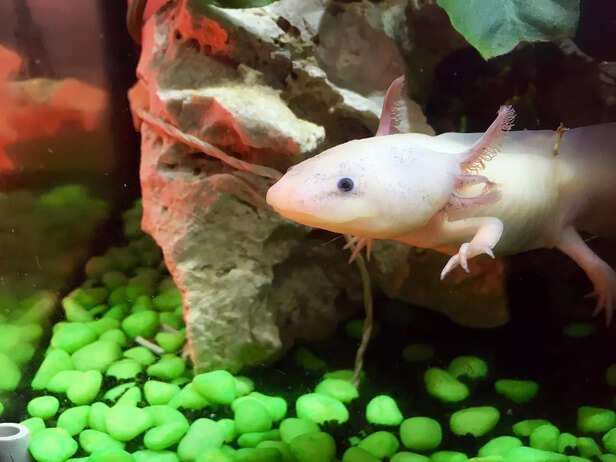
axolotl
Image credit : Pixabay
Some animals sound like mistakes on paper. The axolotl, a salamander that refuses to grow up, spends its entire life in a juvenile form. It keeps its feathery external gills and can regenerate limbs, organs, and even parts of its brain. Instead of changing to survive, it mastered staying the same. In a world obsessed with growth and progress, the axolotl quietly proves that sometimes survival means not changing at all.
Creatures That Feel Pain And Emotion
For a long time, humans believed emotions were exclusive to us. Science has slowly and gently proved us wrong. Elephants are known to mourn their dead. They remember bones, return to the same places, and stand silently, touching remains with their trunks. Dolphins call each other by unique whistles, essentially names. Rats laugh when tickled. These facts do not just amaze us; they challenge the idea that humans stand emotionally alone at the top of life’s hierarchy.
The Animals That Break Biological Rules
There are animals that rewrite biology textbooks. The immortal jellyfish can revert back to its younger form after reaching adulthood, essentially restarting its life cycle. It does not live forever by avoiding death, but by refusing to age. Then there is the tardigrade, a microscopic creature that can survive extreme heat, freezing cold, radiation, and even the vacuum of space. It shuts itself down, waits patiently, and comes back to life when conditions improve. It feels less like biology and more like science fiction.
Night Creatures With Superpowers
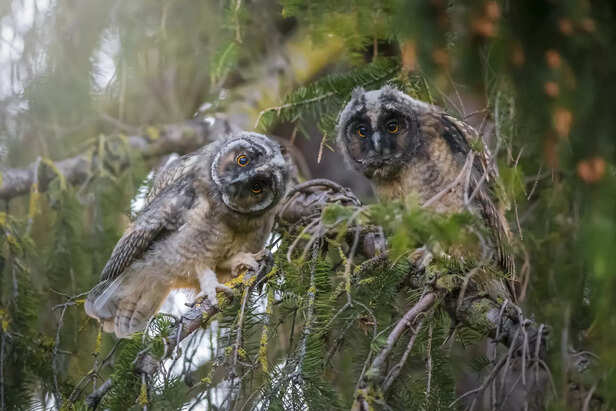
two owls sitting
Image credit : Pixabay
Some animals possess abilities that feel borrowed from superheroes. Owls can rotate their heads almost all the way around, not because their necks twist unnaturally, but because their blood vessels are specially designed to prevent damage. Bats navigate in complete darkness using echolocation, painting a sound-based picture of the world around them. They do not see with eyes alone. They see with sound. Nature, it seems, solved problems long before technology tried to imitate them.
Animals That Can Change Their Identity
Identity in nature is not always fixed. Clownfish are born male, but when the dominant female dies, the largest male changes sex to take her place. This is not confusion or rarity. It is biology doing what is necessary for survival. Frogs can change skin color based on mood, temperature, or surroundings. Octopuses take this even further, changing color, texture, and shape within seconds to blend into their environment. They do not just hide. They become the world around them.
Unexpected Intelligence In Small Bodies
We often associate intelligence with size, but nature disagrees. Crows can solve puzzles, remember human faces, and even hold grudges. Bees can count, recognize patterns, and communicate complex directions through dance. An octopus can open jars, escape tanks, and learn through observation. These animals remind us that intelligence comes in many forms, not all of them loud or obvious.
Animals That Live In Extreme Places
Some creatures live where life should be impossible. The Antarctic icefish has antifreeze proteins in its blood that prevent it from freezing. Camels can survive days without water by regulating body temperature and storing fat, not water, in their humps. Deep-sea creatures live under pressure so intense it would crush a human instantly, glowing softly in the dark like living stars. Life does not just survive. It adapts beautifully.
Bonds That Go Beyond Survival
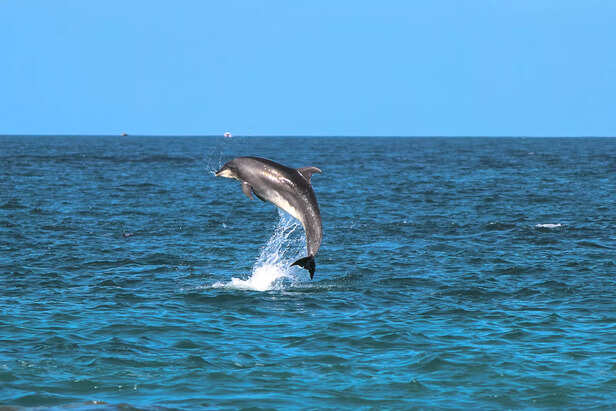
dolphin
Image credit : Pixabay
Love and bonding are not uniquely human emotions. Wolves form lifelong packs based on cooperation and trust. Penguins travel thousands of miles to reunite with the same partner each breeding season. Swans often mate for life, choosing companionship over convenience. These bonds are not sentimental stories added by humans. They are observed behaviors, repeated across generations, quietly reminding us that connection is a survival strategy too.
Animals With Senses We Cannot Imagine
Human senses are limited, and animals constantly expose that limitation. Snakes can sense heat, allowing them to hunt in complete darkness. Sharks can detect electrical fields produced by other animals’ muscles. Pigeons can sense Earth’s magnetic field, using it as a natural GPS. To them, the world looks completely different. What we consider invisible is often loud and clear to another species.
The Silent Communicators Of Nature
Not all communication requires sound. Trees share nutrients through underground fungal networks, often called the wood wide web. While not animals, this system supports entire ecosystems. Among animals, ants leave chemical trails, whales communicate across oceans through low-frequency calls, and cuttlefish flash patterns across their skin to send messages. Nature speaks constantly. We just do not always understand the language.
Animals That Defy Time
Some animals age incredibly slowly. Greenland sharks can live for hundreds of years, swimming quietly through cold, dark waters long before modern civilization existed. Bowhead whales show little sign of aging even after two centuries. These creatures are living history, carrying centuries within their cells, reminding us how brief human time truly is.
Fearsome Looks With Gentle Hearts
Appearances can be misleading. Sharks, often portrayed as mindless killers, are curious and cautious. Most species pose little threat to humans. Hyenas, usually shown as villains, have complex social structures and care deeply for their young. Even wolves, feared for generations, play a crucial role in maintaining ecosystem balance. Nature rarely fits into good or evil categories. It simply exists.
Why These Weird Facts Matter
These strange truths are not just entertaining. They change how we see life. When we realize animals feel, adapt, remember, and communicate, it becomes harder to treat them as background scenery. Understanding their complexity builds empathy. It reminds us that humans are not separate from nature, but deeply woven into it.
A World More Magical Than Fiction
The real magic is not that these animals exist, but that they exist quietly, without demanding attention. Nature does not exaggerate itself. It simply is. Every glowing fish, grieving elephant, and regenerating salamander is proof that reality can be far more astonishing than imagination.
Learning To Look Closer
Most of nature’s weirdness hides in plain sight. We walk past ants without noticing their organized cities. We hear birds without realizing they might remember us individually. The more we learn, the more the world feels alive. Curiosity changes ordinary moments into wonders.
The Quiet Lesson Nature Teaches Us
Nature does not aim to impress us, yet it does. It teaches resilience through creatures that survive extremes, patience through animals that live centuries, and adaptability through those that change themselves entirely. These lessons are not spoken, but lived. There will always be animals we do not fully understand, and that is okay. Mystery keeps curiosity alive. Nature’s weirdos remind us that life is not meant to fit neatly into boxes. It is meant to surprise, confuse, and humble us. The more we learn, the more we realize how much remains unknown. And perhaps that is the most beautiful fact of all.
Celebrate the bond with your pets, explore Health & Nutrition, discover Breeds, master Training Tips, Behavior Decoder, and set out on exciting Travel Tails with Times Pets!