
Madhubani Art: Pets and Animals in Bihar’s Folk Paintings
Aparna Jha | Sept 03, 2025, 08:22 IST

Harmony of Life in Madhubani Art
Image credit : AI (Chatgpt)
Madhubani art, also known as Mithila painting, is one of the most celebrated forms of folk art in India. Originating in the Mithila region of Bihar, this art form has a history that stretches back thousands of years. Traditionally created by women on the walls and floors of their homes, Madhubani paintings capture the essence of daily life, mythology, and the natural world. What makes this art unique is its connection with nature and animals, which are often depicted with symbolic meanings. Among the many themes explored, pets and animals hold a special place in Madhubani paintings, reflecting both cultural values and spiritual beliefs.
Origins of Madhubani Art
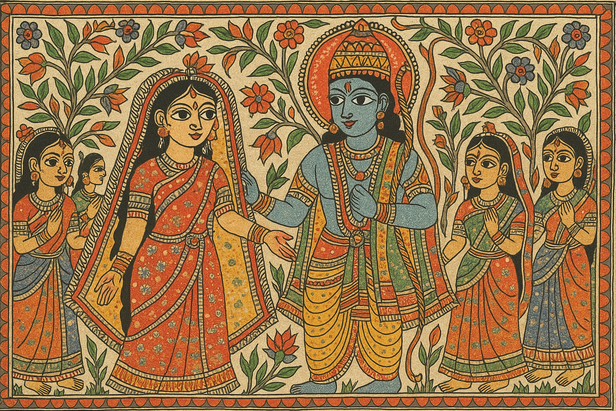
Divine Union in Madhubani Tradition
Image credit : AI (Chatgpt)
The close relationship between people and animals in rural Bihar naturally found its way into this art. In agrarian societies, animals were not only companions but also helpers in farming, symbols of prosperity, and subjects of reverence. This reverence became immortalized in Madhubani paintings, where cows, elephants, peacocks, fish, and other creatures are portrayed in vibrant detail.
Symbolism of Animals in Madhubani Art
- Cows: Represent abundance, motherhood, and the nurturing force of nature. As sacred animals in Hinduism, cows are often painted with great reverence.
- Elephants: Symbolize strength, prosperity, and the blessings of Lord Ganesha. In wedding scenes, elephants are painted as carriers of good fortune.
- Peacocks: Represent beauty, romance, and spiritual awakening. Peacocks are also linked with Lord Krishna and goddess Saraswati.
- Fish: A common motif in Madhubani art, fish symbolize fertility, transformation, and prosperity. They are also believed to bring good luck.
- Tigers and Lions: Painted to symbolize power and courage. In some depictions, they accompany deities like Durga.
- Birds: Small birds often appear in paintings, signifying freedom, communication, and connection between heaven and earth.
Pets in Madhubani Paintings
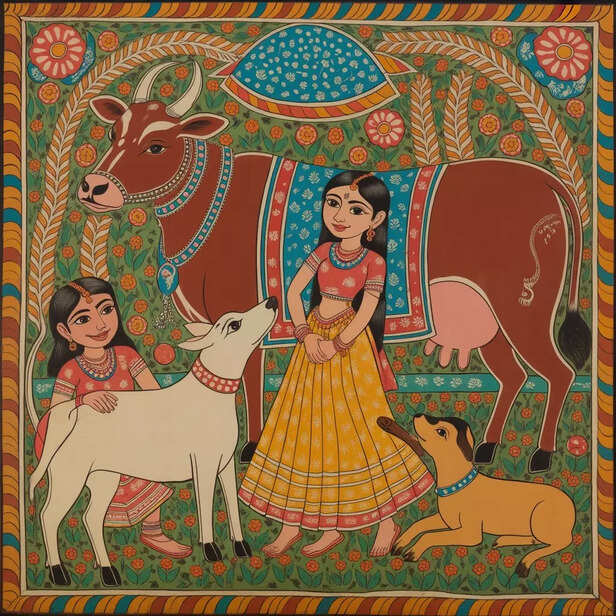
Bond with Animals in Madhubani Folk Tradition
Image credit : AI (Ideogram)
- Dogs: In many villages, dogs are protectors of households. Madhubani artists often paint them beside village homes, representing loyalty and guardianship.
- Goats: Kept as pets and for livelihood, goats are portrayed as symbols of prosperity. Their presence in paintings reflects the rural economy.
- Cats: Though less common, cats appear in some paintings, often linked with folk tales or as protectors of stored grains.
Techniques and Styles
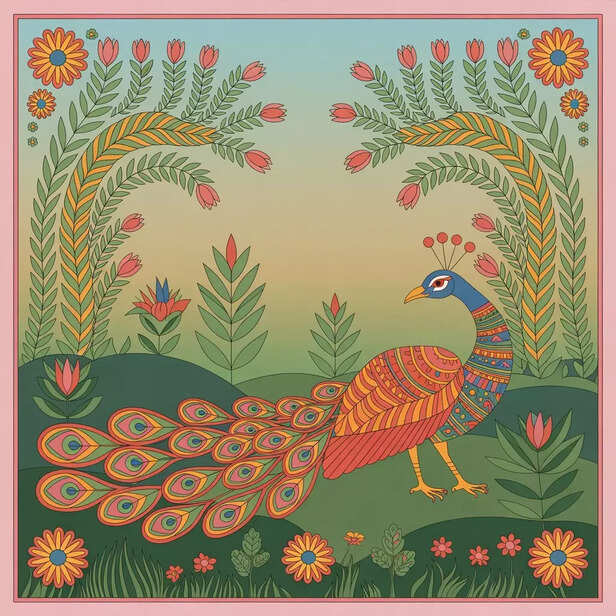
The Grace of a Peacock in Madhubani Art
Image credit : AI (Ideogram)
The style is characterized by:
- Double lines filled with intricate patterns.
- Bright, flat colors without shading.
- Geometric borders that frame the artwork.
- Symmetry and balance, often seen in animal depictions.
Animals in Ritualistic Paintings
- Elephants and horses are drawn on walls to ensure success and wealth.
- Fish and turtles are painted in rituals for fertility and growth.
- Birds are painted during spring festivals to celebrate renewal and love.
Global Recognition and Evolution
Contemporary Madhubani artists often depict endangered species like tigers, elephants, and dolphins to raise awareness about environmental issues. By combining tradition with modern themes, they show that folk art can be both timeless and relevant.
At the same time, the portrayal of pets in Madhubani art is also gaining attention. Urban buyers appreciate paintings of dogs, cows, or birds, which reflect warmth and harmony with nature. This shift allows artists to earn livelihoods while keeping their traditions alive.
The Emotional Connection
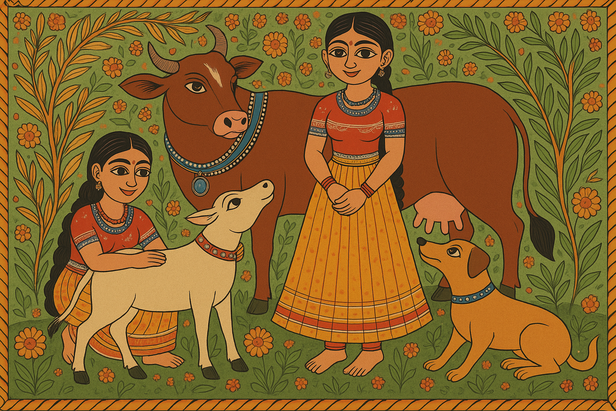
Emotional Bonds in Madhubani Art
Image credit : AI (Chatgpt)
Preserving Tradition Through Animals
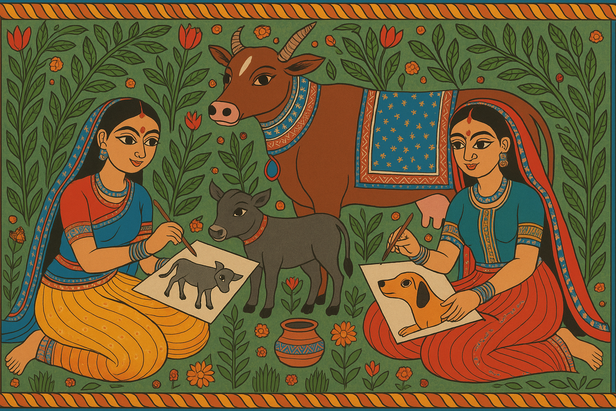
Passing Traditions Through Madhubani Art
Image credit : AI (Chatgpt)
By preserving the depictions of cows, fish, birds, and even household pets, artists ensure that future generations understand the cultural significance of animals in Mithila society. These paintings become not only art pieces but also historical documents of how people lived with and revered animals.
Madhubani art is more than a folk tradition; it is a living language of colors, symbols, and emotions. Pets and animals in these paintings embody the harmony between humans and nature in rural Bihar. From sacred cows and majestic elephants to loyal dogs and humble goats, every creature painted tells a story. These animals symbolize prosperity, spirituality, love, and companionship, while also reflecting the realities of everyday life.
In a world where the bond between humans and nature is often overlooked, Madhubani art stands as a reminder of coexistence. It celebrates the animals that share our lives, honors their place in culture and spirituality, and ensures their presence in the collective memory of future generations.
Discover expert advice and the latest tips on pet care, training, health, and more. Stay updated with all things pets at Times Pets!
Frequently Asked Questions (FAQs)
- Why are animals important in Madhubani paintings?
Animals in Madhubani art symbolize prosperity, spirituality, fertility, and the close bond between humans and nature. - Which animals are commonly seen in Madhubani paintings?
Cows, elephants, fish, peacocks, birds, and sometimes pets like dogs and goats are often depicted. - What materials are traditionally used in Madhubani art?
Artists use natural dyes from plants, flowers, and minerals, along with brushes made from twigs or fingers. - How is Madhubani art relevant today?
Contemporary Madhubani art continues to thrive globally, blending tradition with modern themes like environmental awareness.