
How Felines Memorize Daily Routines Better Than Humans
Anushka Tripathi | Feb 25, 2026, 13:30 IST

pet portrait cat
Image credit : Freepik
Cats may not read clocks, but they remember life with astonishing precision. This article explores how cats memorize daily routines better than humans by observing patterns, emotions, and repetition. From knowing meal times to sensing emotional shifts, cats become silent timekeepers of the home. Blending science with emotion, the piece reveals how feline memory is rooted in survival instincts, routine, and deep human bonding, offering a gentle reminder of the power of presence and consistency.
Cats are often called lazy, aloof, or uninterested in the world around them. Yet anyone who lives with a cat knows there is something quietly astonishing about them. They may not wear watches or check calendars, but they somehow know exactly when it is time for breakfast, when you are late for work, when the lights should be turned off, and even when it is time to sleep. Many cat parents eventually realize something unsettling and beautiful at the same time. Their cats remember daily routines better than they do.
This is not a coincidence, imagination, or emotional bias. Cats are deeply observant animals. Their lives revolve around patterns, repetition, and emotional cues. While humans get distracted by phones, deadlines, and endless thoughts, cats remain rooted in rhythm. Over time, they memorize the structure of a day so precisely that they begin to anticipate it before it happens.
The Silent Timekeepers Of The House

cute cat
Image credit : Freepik
Cats do not experience time the way humans do. They do not count hours or minutes, but they are masters of sequence. They remember what usually happens after what. If food comes after the alarm rings, the alarm becomes food in their mind. If you sit on the sofa after dinner, the sofa becomes evening. If you close your laptop and stretch, it means bedtime is approaching.
This is why a cat will appear out of nowhere five minutes before you usually feed them. This is why they sit by the door exactly when you normally return home. They are not guessing. They are recalling patterns that have repeated hundreds of times. To a cat, routine is safety. Predictability makes the world feel secure. Once a routine is learned, it becomes embedded in their daily awareness.
Why Cats Are So Good At Remembering Routines
Cats evolved as both predators and prey. This dual role made them hyper observant. In the wild, noticing small changes in the environment could mean survival or death. Domesticated cats carry this same mental wiring into human homes. Their brains are designed to notice repetition. They remember sequences linked to outcomes like food, warmth, affection, or comfort. Humans, on the other hand, multitask constantly. Our minds jump between past, future, and present. Cats live almost entirely in the present while remembering the structure of the past. This makes their memory sharper when it comes to habits. They do not forget because they are not overloaded with unnecessary information.
How Cats Learn Human Schedules
Cats do not need instructions to learn routines. They watch. Every single day. They observe how you move, when you wake up, how long you stay in the bathroom, which cupboard opens before food arrives, and how your body language changes before you leave the house. Over time, they create a mental map of your life. Your morning stretch might signal breakfast. Your shoes might signal loneliness. Your evening silence might signal cuddle time. Even emotional routines are memorized. Cats often know when you are anxious, tired, or sad simply because your behavior slightly changes. This learning is passive yet deeply intentional. They are always watching, even when it feels like they are sleeping.
Cats And Internal Clocks
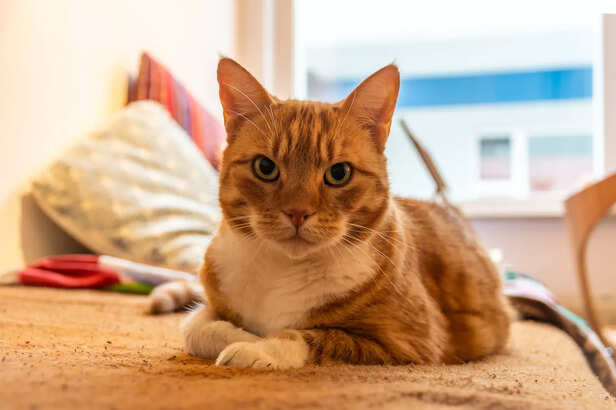
ginger cat
Image credit : Freepik
Many cat parents believe their cats have an internal clock, and in a way, they do. Cats are highly sensitive to environmental cues like light, sound, temperature, and human movement. Changes in sunlight tell them when morning or evening is approaching. Sounds like alarms, traffic, or prayer calls become time markers. But more than that, cats rely on consistency. When events happen at roughly the same time every day, their brain links them into a predictable loop. This loop becomes stronger with repetition. Even if the clock changes or the phone alarm fails, the sequence remains intact in the cat’s mind.
When Cats Know Before You Do
One of the most fascinating experiences is when a cat reminds a human of their own routine. A cat may sit near the door before you realize you are late. They may paw at you when it is bedtime, even if you want to scroll longer. They may demand food exactly at the usual time, forcing you to check the clock and realize they are right. This is not dominance or entitlement. It is memory combined with expectation. In the cat’s world, routines are promises. When those promises are delayed, they react. Cats do not like broken patterns. Not because they want control, but because stability matters to them deeply.
Emotional Routines Matter Too
Cats remember emotional routines just as strongly as physical ones. If you talk to them softly every night, they will wait for it. If you cuddle them after work, they will expect that comfort. If you cry in silence sometimes, they may start sitting near you at that hour. Many people believe cats are indifferent to human emotions, but routine proves otherwise. Cats associate emotional states with time and place. They may not understand the reason behind your sadness, but they recognize the pattern of it. This is why some cats become emotional anchors in their homes. They show up not randomly, but consistently, during moments that matter.
Why Humans Forget What Cats Remember
Humans forget routines because our lives are fragmented. We break patterns ourselves. We stay up late, skip meals, change schedules, and constantly adapt. Our brains prioritize novelty and problem-solving over repetition. Cats thrive on repetition. They do not seek variation for excitement. They seek familiarity for peace. This difference makes it seem like cats are more disciplined, but in truth, they are simply more present. They give full attention to what repeats, while humans are busy chasing what changes.
When Routine Changes And Cats React

ginger cat
Image credit : Freepik
Any cat parent who has changed jobs, shifted homes, or altered daily schedules has seen how deeply cats react to routine disruption. A cat may become anxious, clingy, distant, or vocal. Some stop eating. Some sleep excessively. Some act out. This is not misbehavior. It is confusing. The routine they memorized has vanished. The safety map they relied on no longer works. Until a new pattern forms, they feel unsettled. This reaction shows just how deeply routines are stored in their memory. It also explains why cats take time to adjust to change.
The Comfort Of Being Remembered
There is something profoundly emotional about realizing your cat remembers your life so closely. They remember when you wake up tired. They remember when you come home happy. They remember when you forget yourself. In a world where humans often feel unseen, cats offer quiet recognition. Not through words, but through presence. They sit where you usually sit. They wait for you to return. They show up when you usually need them. This is not a coincidence. This is memory shaped by love and habit.
What Cats Teach Us About Living
Cats do not rush time. They respect it. They let it flow in familiar patterns. They remind us that routine is not boring. It is grounding. In remembering daily life better than humans, cats show us the power of consistency. They show us that noticing small moments builds emotional security. They show us that being present makes memory stronger. Perhaps cats do not memorize routines to control us. Perhaps they do it to stay connected to us.
A Quiet Promise Between Cats And Humans
Every routine a cat memorizes is a silent promise. A promise that says, I am watching. I am here. I remember you. When cats become the keepers of time in our homes, they are not just tracking food or sleep. They are holding onto the rhythm of shared life. And maybe that is why, even on the most chaotic days, a cat’s presence feels like order. Because while humans forget, cats remember. And in that remembering, they make a house feel like home.
Celebrate the bond with your pets, explore Health & Nutrition, discover Breeds, master Training Tips, Behavior Decoder, and set out on exciting Travel Tails with Times Pets!