
Dog vs Cat Communication Styles: Key Differences Explained
Upasna Yadav | Apr 14, 2026, 08:42 IST

Dog and Cat Body Language Comparison in a Home Setting
Image credit : Pexels
Understanding how pets communicate is essential for building trust, preventing misunderstandings, and ensuring their emotional well-being. Dogs and cats, though both beloved companions, express themselves in very different ways. Dogs are generally more social and expressive, often relying on body language and vocal cues, while cats tend to be subtle, independent, and more nuanced in their communication. This article explores the key differences between dog and cat communication styles, helping pet owners interpret their pets’ signals more effectively and respond with care and confidence.
Highlights
1. Understanding the communication styles of dogs and cats is a crucial step toward becoming a responsible and empathetic pet owner. Dogs, with their expressive nature and social instincts, rely heavily on visible body language and frequent vocalizations to convey their emotions and intentions.
2. Cats, in contrast, communicate through subtle cues, quiet signals, and a more independent approach that requires patience and careful observation to interpret.
3. Recognizing these differences not only prevents misunderstandings but also helps in identifying signs of stress, fear, or discomfort early. By learning to observe patterns, responding consistently, and respecting each pet’s unique communication style, owners can build a deeper emotional connection and create a harmonious environment where both pets feel safe, understood, and valued.
2. Cats, in contrast, communicate through subtle cues, quiet signals, and a more independent approach that requires patience and careful observation to interpret.
3. Recognizing these differences not only prevents misunderstandings but also helps in identifying signs of stress, fear, or discomfort early. By learning to observe patterns, responding consistently, and respecting each pet’s unique communication style, owners can build a deeper emotional connection and create a harmonious environment where both pets feel safe, understood, and valued.
Why Understanding Pet Communication Matters ?
Understanding Tail Movements in Dogs and Cats
Image credit : Pexels
Communication is the foundation of any relationship, including the one you share with your pet. Dogs and cats cannot speak human language, but they constantly send signals through their posture, sounds, and actions. Misinterpreting these signals can lead to confusion, stress, or even behavioral problems. By learning to decode these cues, pet owners can strengthen their bond, improve training, and ensure a happier, healthier life for their animals.
Dog Communication Style: Social and Expressive

Vocal Communication Differences Between Dogs and Cats
Image credit : Pexels
Body Language in Dogs
Vocal Communication in Dogs
Social Interaction and Eye Contact
Cat Communication Style: Subtle and Independent

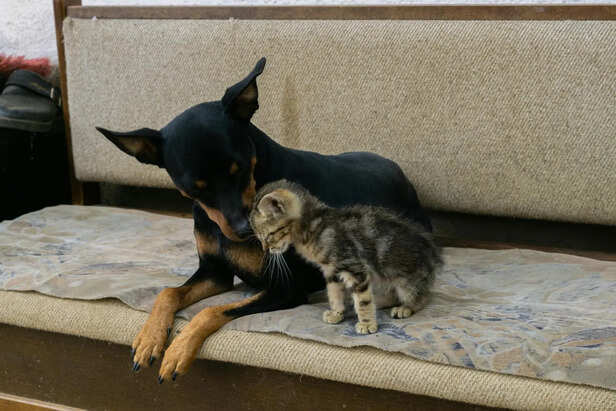
Decoding the Subtle Non-Verbal Language Between Cats and Dogs
Image credit : Pexels
Body Language in Cats
Vocal Communication in Cats
Territorial and Independent Nature
Key Differences Between Dog and Cat Communication
Expressiveness vs Subtlety
Social vs. Independent Behavior
Use of Vocalization
Body Language Complexity
Celebrate the bond with your pets, explore Health & Nutrition, discover Breeds, master Training Tips, Behavior Decoder, and set out on exciting Travel Tails with Times Pets!
Frequently asked questions (FAQs)
- Why do dogs seem easier to understand than cats?
Dogs often appear easier to understand because their communication style is more direct and expressive. They use clear body movements, vocalizations, and facial expressions that are easier for humans to interpret. Cats, on the other hand, communicate in more subtle ways, which can be overlooked or misunderstood. Their signals often require closer observation and experience to decode accurately. - Can cats and dogs understand each other’s communication styles?
Cats and dogs can learn to understand each other over time, especially if they are raised together. However, their natural communication styles differ significantly, which can sometimes lead to misunderstandings. For example, a dog’s enthusiastic approach might be perceived as threatening by a cat. With gradual exposure and positive experiences, they can adapt and coexist peacefully. - Why does my cat ignore me while my dog seeks attention constantly?
This difference stems from their natural instincts. Dogs are pack animals that seek social interaction and approval, while cats are more independent and self-reliant. A cat ignoring you does not mean it doesn’t care; it simply means it prefers to interact on its own terms.