
Do Pets Have a Favourite Song or Music Taste?
Om Saraswat | Mar 21, 2026, 15:18 IST

Paws & Beats
Image credit : Unsplash
Music is an important part of human life, but many pet owners wonder if their pets can also enjoy music. While animals may not understand music the same way humans do, research and observations show that pets can respond to different sounds, rhythms, and tones. Some pets become calm when soft music plays, while others may become curious or excited. Dogs, cats, and even birds often react differently depending on the type of music they hear. Understanding how pets respond to music can help owners create a relaxing and comfortable environment for them.
Highlights
1.Pets can react to music through sound patterns, rhythm, and pitch.
2.Dogs often feel calmer when listening to slow and soft music.
3.Cats respond more to high-pitched sounds because of their sensitive hearing.
4.Many birds react strongly to music and may chirp or move with the rhythm.
5.Loud or fast music can sometimes make pets feel stressed or restless.
2.Dogs often feel calmer when listening to slow and soft music.
3.Cats respond more to high-pitched sounds because of their sensitive hearing.
4.Many birds react strongly to music and may chirp or move with the rhythm.
5.Loud or fast music can sometimes make pets feel stressed or restless.
Many people enjoy listening to music to relax, focus, or improve their mood. Interestingly, pets may also respond to music in unique ways. Although animals do not understand lyrics or melodies like humans, they can still sense sound patterns, pitch, and rhythm. These elements can influence their emotions and behaviour.
Dogs are known to react differently to various types of music. Some studies have suggested that dogs tend to feel calmer when listening to slow and soft music such as classical tunes. The gentle rhythm can help reduce stress, especially when dogs are left alone at home. On the other hand, loud or fast music may make some dogs restless or alert.
![Shared Beats]()
Cats also respond to sound, but their preferences can be different from dogs. Cats have very sensitive hearing and may react more to higher pitched sounds. Some experts believe that music designed with sounds similar to a cat’s natural vocal range may attract their attention more than regular human music. However, every cat has its own personality, so reactions can vary.
![Cat on the Mic]()
Birds are another group of pets that often respond strongly to music. Many pet birds enjoy rhythmic sounds and may even chirp or move along with the beat. Some birds can imitate sounds and melodies they hear frequently, which shows that they can recognize certain patterns in music.
Even small animals such as rabbits or guinea pigs may respond to calm sounds in their environment. Soft background music can sometimes make them feel more relaxed, especially in a quiet home.
![Happy Tunes]()
It is important to remember that pets experience sound more sensitively than humans. Loud music or sudden noises may cause stress instead of enjoyment. Because of this, gentle and moderate sound levels are always better when playing music around pets.
Over time, many pet owners notice that their animals respond positively to certain types of music. Some pets may relax, fall asleep, or stay calm when familiar sounds are playing. This shows that while pets may not have a "favourite song" like humans, they can still develop preferences for certain sounds and rhythms.
Celebrate the bond with your pets, explore Health & Nutrition, discover Breeds, master Training Tips, Behaviour Decoder, and set out on exciting Travel Tails with Times Pets!
Dogs are known to react differently to various types of music. Some studies have suggested that dogs tend to feel calmer when listening to slow and soft music such as classical tunes. The gentle rhythm can help reduce stress, especially when dogs are left alone at home. On the other hand, loud or fast music may make some dogs restless or alert.

Shared Beats
Image credit : Freepik
Cats also respond to sound, but their preferences can be different from dogs. Cats have very sensitive hearing and may react more to higher pitched sounds. Some experts believe that music designed with sounds similar to a cat’s natural vocal range may attract their attention more than regular human music. However, every cat has its own personality, so reactions can vary.
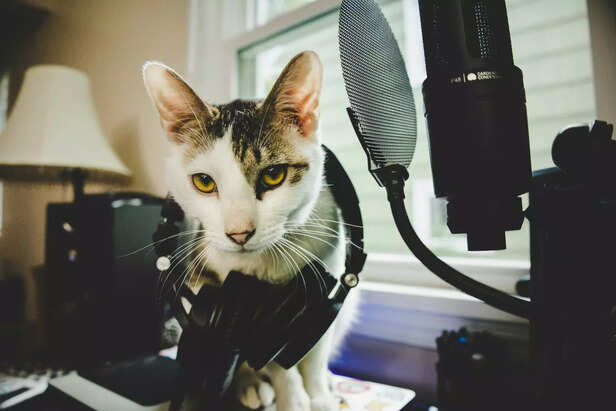
Cat on the Mic
Image credit : Unsplash
Birds are another group of pets that often respond strongly to music. Many pet birds enjoy rhythmic sounds and may even chirp or move along with the beat. Some birds can imitate sounds and melodies they hear frequently, which shows that they can recognize certain patterns in music.
Even small animals such as rabbits or guinea pigs may respond to calm sounds in their environment. Soft background music can sometimes make them feel more relaxed, especially in a quiet home.

Happy Tunes
Image credit : Unsplash
It is important to remember that pets experience sound more sensitively than humans. Loud music or sudden noises may cause stress instead of enjoyment. Because of this, gentle and moderate sound levels are always better when playing music around pets.
Over time, many pet owners notice that their animals respond positively to certain types of music. Some pets may relax, fall asleep, or stay calm when familiar sounds are playing. This shows that while pets may not have a "favourite song" like humans, they can still develop preferences for certain sounds and rhythms.
Celebrate the bond with your pets, explore Health & Nutrition, discover Breeds, master Training Tips, Behaviour Decoder, and set out on exciting Travel Tails with Times Pets!
Frequently Asked Questions(FAQ's)
- Can pets actually enjoy music?
Pets may not understand music like humans do. However, they can respond emotionally to different sounds, tones, and rhythms. - What type of music is best for pets?
Soft and slow music, especially calm instrumental sounds, usually helps pets relax. Loud or aggressive music should generally be avoided. - Do dogs have a favourite type of music?
Many dogs seem to relax more when listening to gentle classical-style music. Faster or louder music may sometimes make them more alert. - Can music help reduce pet anxiety?
Yes, soft background music can sometimes calm pets during stressful situations. It may help when pets are alone or feeling nervous.