
Do Dogs Understand Our Words or Just Our Voice? The Truth Might Surprise You
Anushka Tripathi | Jan 24, 2026, 17:30 IST

young woman and a dog
Image credit : Freepik
Dogs do not just respond to how we speak. They understand more of what we say than we once believed. This article explores whether dogs truly comprehend human words or simply react to tone. Supported by modern neuroscience and real pet parent experiences, it reveals how dogs process words and emotions separately, learn language through association, and read human feelings with impressive accuracy. Together, words and tone create a shared language built on trust, emotion, and a deep bond between dogs and humans.
When Your Dog Tilts Its Head, Is It Really Listening?
Every dog parent has experienced it. You say “walk,” and your dog jumps up with excitement. You whisper “bath,” and suddenly they disappear. You talk softly when they are sad, and they come closer, resting their head on your lap. This raises a question that feels simple but goes deep. Do dogs actually understand the words we speak, or are they only reacting to the tone of our voice?
For years, people believed that dogs responded only to tone. That they did not understand language, just emotion. But modern science, real-life observations, and emotional experiences shared by millions of pet parents tell a far richer story. Dogs understand more than we once thought, not in the way humans do, but in a way that is deeply emotional, intelligent, and meaningful.
Why This Question Matters So Much
Understanding how dogs interpret human communication helps us build stronger bonds with them. It changes how we train them, comfort them, and even discipline them. Most importantly, it reminds us that dogs are not just pets reacting on instinct. They are emotional beings learning our world every single day.
The Long-Standing Belief: Dogs Only Understand Tone
For decades, the popular belief was simple. Dogs do not understand words. They only understand how you say them. A happy voice equals good. An angry voice equals bad. A calm voice equals safety.
This belief came from early animal behavior studies and everyday observations. A dog will often react positively even if you say something meaningless in a cheerful tone. Say “you are a bad dog” in a playful voice, and the dog still wags its tail. Say “good boy” angrily, and the dog may look confused or scared. This led many to assume tone mattered more than meaning. But that is only half the truth.
What Science Discovered About the Dog Brain

dogs playing with frisbee
Image credit : Freepik
In recent years, scientists have begun studying dogs using brain imaging technology. What they found changed everything. Research conducted at leading universities revealed that dogs process language and tone in different parts of their brain. This is important. Words are processed in one area. Tone is processed in another way. This means dogs do not just hear sounds. They separate what we say from how we say it.
When dogs hear familiar words like praise or commands, their brain shows recognition. When those words are paired with a positive tone, the reward centers of their brain light up even more. In simple words, dogs understand words and tone together.
Dogs Learn Words the Same Way Babies Do
Dogs do not understand language the way humans do. They do not grasp grammar or sentence structure. But they do learn words through association. Just like a child learns that “milk” means something comforting and familiar, dogs learn that “walk” means excitement, “treat” means reward, and their name means attention.
Over time, repeated exposure builds understanding. Some dogs can learn dozens of words. Others can learn hundreds. There are even documented cases of dogs understanding over one thousand object names. This is not a coincidence. It is learning.
Why Tone Still Matters Deeply
While dogs understand words, tone plays a powerful emotional role. Dogs are experts at reading human emotions. They observe our body language, facial expressions, posture, and voice. Tone helps them understand how we feel about what we are saying. For example, if you say “come here” softly, your dog may approach calmly. Say it sharply, and they may hesitate or lower their head.
Tone adds emotional meaning to words. It tells the dog whether the situation is safe, exciting, or threatening. Words tell them what is happening. Tone tells them how to feel about it.
Why Dogs Sometimes Seem to Ignore Words
Many pet parents say, “My dog understands me only when they want to.” This happens for a few reasons. First, dogs rely heavily on consistency. If a word is used in many situations with different meanings, it becomes confusing. Second, emotional context matters. A stressed dog may not respond even if they understand the word. Fear, anxiety, or excitement can overpower understanding.
Third, dogs are intelligent decision makers. Sometimes they understand perfectly and choose not to comply. This is not disobedience. It is a choice.
Dogs Understand More Than Commands
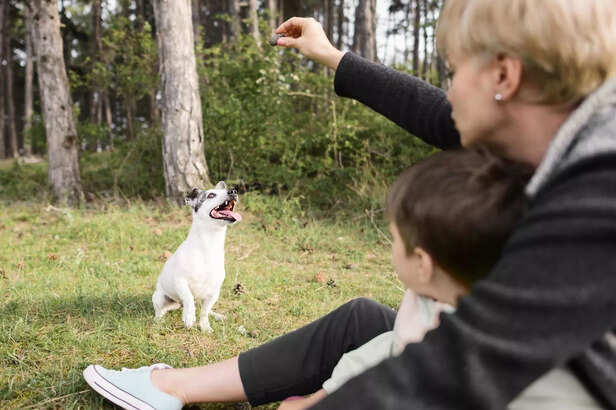
adorable little dog
Image credit : Freepik
Dogs do not only understand training words. They also understand emotional language. They recognize phrases tied to routine. They respond to comforting words during sadness. They react differently when spoken to gently versus harshly. Dogs can sense when you are upset even before you speak. When words follow that emotion, they connect the two.
This is why talking to your dog during difficult moments often feels healing. They may not understand every word, but they understand the emotion behind it.
How Dogs Read the Whole Picture
Dogs do not rely on words alone. They read the entire situation.
- Your tone
- Your posture
- Your facial expression
- Your energy
Can Dogs Understand Conversations?
Dogs do not understand conversations the way humans do. But they do pick up on patterns. If you regularly say certain words before an event, dogs remember. They associate sounds with outcomes. Mention “vet” repeatedly before visits, and your dog learns the connection. Say “car” before outings, and excitement follows. They may not understand the full sentence, but they understand the important parts.
Dogs often obey one person more than another. This is not favoritism alone. Dogs respond best to people who communicate clearly and consistently. Tone, timing, and emotional connection all matter. A dog may ignore commands from someone who sounds unsure but respond instantly to someone confident and calm. This shows that communication with dogs is a relationship, not a script.
Emotional Intelligence in Dogs

dog
Image credit : Freepik
Dogs show emotional intelligence through empathy. They come closer when you are sad. They become playful when you are happy. They act protective when you are scared. This emotional awareness makes communication deeper. Dogs are not just listening. They are feeling.
Dogs may not understand the word “love” as humans do. But they understand what love feels like.
- They understand gentle voices.
- They understand affection.
- They understand presence.
Why Dogs Sometimes React to Tone Over Words
If words and tone conflict, dogs often trust tone more. Say “good dog” angrily, and the dog senses tension. Say “no” gently, and the dog may not feel threatened. Tone carries emotional truth. Dogs are wired to prioritize emotional safety.
Dogs have adapted to human communication over thousands of years. They evolved alongside us. They learned our voices, expressions, and emotions. This is why dogs understand humans better than almost any other animal. They do not just live with us. They live in our emotional world.
A Language Built On Trust, Emotion, And Love
So, do dogs understand human language or just tone? The truth is both. Dogs understand words through learning and memory. They understand tone through emotion and instinct. Together, these create a language of connection.
When you speak to your dog, you are not just making sounds. You are building understanding, trust, and love. And that is why, even without words, dogs and humans understand each other better than we ever imagined.
Celebrate the bond with your pets, explore Health & Nutrition, discover Breeds, master Training Tips, Behavior Decoder, and set out on exciting Travel Tails with Times Pets!