
Beyond Survival: Quantifying Joy In The Animal Kingdom
Upasna Yadav | Feb 22, 2026, 14:00 IST

Playful Leap Of Joy In Animals
As animals ourselves, we think we see happiness in our fellow creatures all the time. Dogs romp in the park; squirrels chase each other up and down tree trunks; cat purrs his head off at night while attempting to sleep on face. Yet we know that it may not be glee because we can’t be certain what emotions are felt by a creature that can’t speak to me. Misinterpretation is possible.
Highlights
1. For decades, scientists have struggled to identify or measure true joy or “positive affect,” in sci-speak in nonhuman animals, even though they’ve long assumed it exists. Past research focused on minimizing negatives such as stress, while more recent endeavors strive to promote positives such as happiness.
2. All this history made the study of animal feelings largely taboo, a trend bucked on occasion by researchers like the neuroscientist and early leader in the study of emotions in the brain of animals.
3. But what is animal happiness? With recent advances in the study of animal emotion, current interest into positive rather than negative experiences, and the call for captive and domesticated animals to have good lives, the time is ripe to examine the concept of animal happiness.
2. All this history made the study of animal feelings largely taboo, a trend bucked on occasion by researchers like the neuroscientist and early leader in the study of emotions in the brain of animals.
3. But what is animal happiness? With recent advances in the study of animal emotion, current interest into positive rather than negative experiences, and the call for captive and domesticated animals to have good lives, the time is ripe to examine the concept of animal happiness.
Introduction

Curiosity as a Sign of Joy
There is increasing public concern for the treatment of captive and domesticated animals, including laboratory, farm, work, zoo, companion and managed wild animals. Western societies now call for “a good life” for these animals. A concern for animal welfare is based on the acceptance of animal sentience, which is defined as the capacity to feel pain and pleasure. The traditional approach to animal welfare was that pain, suffering, distress, and other negative physical or mental experiences should be minimized. Consequently, there is a bias in the science of animal welfare toward the study of negative experiences at the expense of positive ones. Advances in our understanding of animals, in particular mammals, and the associated evolution in societal views have led to the gradual inclusion of positive experiences into definitions and assessments of animal welfare. It is now evident that although the study of negative experiences may have more moral urgency, simply aiming at an absence of negative experiences cannot translate into a good life.
Measuring Joy Among Animals
Looking Toward the Future of Studying Joy

The Language Of Animal Affection And Happiness
Though the joy-o-meter project is certainly worthy, there are doubts about whether joy can be quantified across species, or even beyond the individual animal, according to a blog on Psychology Today. Like people, some animals, even within species, are happy with mild moments of joy, while others appreciate wilder forms of joy, so quantifying that joy does not provide a lot of overarching information. Still, the very fact that science now considers animal joy as a serious area of study is a step forward. There is a lot to be gained in a fuller understanding of the animal kingdom in all its complexity both the pain and the joy.
Scientists Are Finally Learning How Animals Feel Joy ?
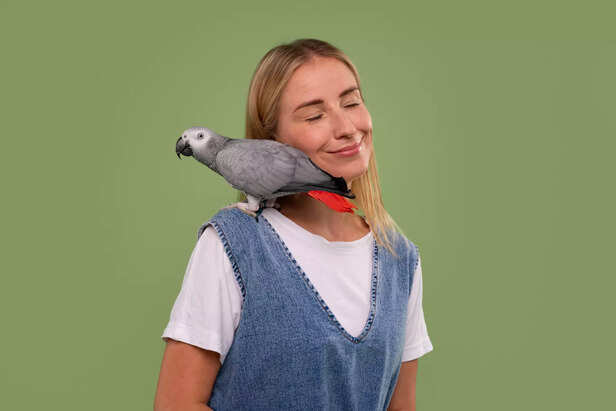
Playful Parrot Expressing Pure Joy
A team of scientists from universities across the United States has created the “joy-o-meter” project. It’s a silly name for a serious attempt to create a loose set of animal-happiness behaviors that can be expressed as metrics. Some of those include behavioral cues, vocalizations, optimism tests, and biological markers that might indicate brief but intense bursts of pleasure. They started with great apes, since chimpanzees laugh, embrace, and pant during playful moments and reunions. Bonobos, meanwhile, respond to surprise jackpots of grapes with excited calls or head nods.
Is your dog happy?
Celebrate the bond with your pets, explore Health & Nutrition, discover Breeds, master Training Tips, Behavior Decoder, and set out on exciting Travel Tails with Times Pets!
Frequently asked questions (FAQs)
- What does “quantifying joy” in animals actually mean?
Quantifying joy refers to scientifically measuring positive emotional states in animals through observable behaviors, physiological markers (like hormone levels), vocalizations, and brain activity. Researchers analyze indicators such as play behavior, social bonding, tail wagging, relaxed body posture, and dopamine release to assess happiness. - Can scientists really prove that animals feel joy?
While animals cannot verbally express emotions, strong scientific evidence suggests they experience positive emotions. Studies on species like rats, dogs, dolphins, and primates show laughter-like vocalizations, playful behavior, and neurological responses similar to human happiness. - What behaviors indicates happiness in animals?
Common signs of joy include:1. Playful movements and social play2. Relaxed body language3. Vocalizations (chirping, purring, playful squeaks)4. Grooming and affectionate behaviors5. Increased curiosity and exploration