
9 Dog Habits That Have a Scientific Explanation
Deepak Rajeev | Apr 16, 2026, 18:42 IST

Dog Habits Explained
Image credit : AP
Many common dog habits, from tail wagging and licking to barking and sniffing, have clear scientific explanations rooted in instinct, communication, and sensory perception. These behaviours are not random but reflect how dogs interpret their environment and bond with humans. Understanding them helps owners better connect with their pets and appreciate the deeper meaning behind everyday canine actions.
Dogs may seem unpredictable at times, reacting to things we cannot see or repeating habits that appear strange, but science reveals that most of their behaviours are not random at all, and instead are deeply rooted in evolution, communication systems, emotional bonding, and sensory perception that humans often fail to fully understand. What looks simple on the surface is often the result of complex biological and psychological mechanisms shaped over thousands of years of living alongside humans.
![Why Dogs Wag Their Tails]() One of the most recognisable dog behaviours, tail wagging, is often mistaken as a simple sign of happiness, but scientific research shows it is actually a sophisticated form of communication used to convey different emotional states. A fast wag may signal excitement, while a slow or stiff wag can indicate uncertainty or caution, making it more similar to human body language than a basic emotional reaction.
One of the most recognisable dog behaviours, tail wagging, is often mistaken as a simple sign of happiness, but scientific research shows it is actually a sophisticated form of communication used to convey different emotional states. A fast wag may signal excitement, while a slow or stiff wag can indicate uncertainty or caution, making it more similar to human body language than a basic emotional reaction.
![Why dogs lick people]() Licking is commonly interpreted as affection, but its origins go back to early puppyhood, where it serves as a bonding and survival behavior, and as dogs grow, it evolves into a way of gathering sensory information, expressing submission, and even calming themselves through the release of feel-good chemicals in the brain. This makes licking a blend of instinct, emotion, and communication rather than a single-purpose act.
Licking is commonly interpreted as affection, but its origins go back to early puppyhood, where it serves as a bonding and survival behavior, and as dogs grow, it evolves into a way of gathering sensory information, expressing submission, and even calming themselves through the release of feel-good chemicals in the brain. This makes licking a blend of instinct, emotion, and communication rather than a single-purpose act.
![Why dogs follow you everywhere]() When your dog follows you from room to room, it is not simply being clingy, but engaging in behavior shaped by pack instincts, where staying close to a leader ensures safety and social connection. Over time, dogs also learn human routines, and following becomes a way of anticipating activity, interaction, or reward.
When your dog follows you from room to room, it is not simply being clingy, but engaging in behavior shaped by pack instincts, where staying close to a leader ensures safety and social connection. Over time, dogs also learn human routines, and following becomes a way of anticipating activity, interaction, or reward.
The familiar head tilt that many find adorable is believed to be linked to attention and cognitive processing, as dogs may tilt their heads to better interpret sounds, read human facial expressions, or adjust their field of vision, especially when trying to understand communication directed at them.
What appears to be barking at nothing is often a response to stimuli beyond human perception, including distant sounds, vibrations, or scents that dogs can detect far more easily due to their heightened sensory abilities, particularly their hearing and sense of smell.
Before settling down, many dogs circle their resting spot, a behavior inherited from wild ancestors who needed to flatten grass, check for threats, and create a safe sleeping area, showing how ancient survival instincts continue to influence modern pets.
When a dog looks directly at you, it is often seeking information, connection, or direction, and studies suggest that mutual eye contact between dogs and humans can strengthen bonding by triggering the release of oxytocin, the same hormone associated with attachment in humans.
Sudden bursts of energy, often called zoomies, are a natural release of pent-up excitement or stress, allowing dogs to reset their emotional state, and this behavior is particularly common in younger dogs or after periods of inactivity.
Sniffing is not just curiosity but a primary way dogs understand the world, as their sense of smell is thousands of times more sensitive than that of humans, allowing them to gather detailed information about their environment, other animals, and even people.
What makes these habits fascinating is that they reveal a fundamental truth: dogs are constantly interpreting, reacting, and communicating within a world that operates very differently from our own, guided by instincts, sensory input, and emotional connections that are both ancient and deeply adaptive. Understanding these behaviours does not just make us better pet owners; it brings us closer to understanding how dogs experience life itself, turning everyday actions into meaningful insights about one of humanity’s closest companions.
Celebrate the bond with your pets, explore Health & Nutrition, discover Breeds, master Training Tips, Behavior Decoder, and set out on exciting Travel Tails with Times Pets!
Why dogs wag their tails
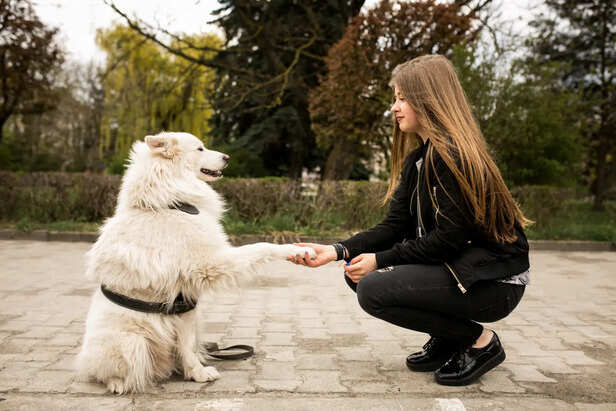
Why Dogs Wag Their Tails
Image credit : Freepik
Why dogs lick people

Why dogs lick people
Image credit : Freepik
Why dogs follow you everywhere

Why dogs follow you everywhere
Image credit : Freepik
Why dogs tilt their heads
The familiar head tilt that many find adorable is believed to be linked to attention and cognitive processing, as dogs may tilt their heads to better interpret sounds, read human facial expressions, or adjust their field of vision, especially when trying to understand communication directed at them.
Why dogs bark at “nothing”
What appears to be barking at nothing is often a response to stimuli beyond human perception, including distant sounds, vibrations, or scents that dogs can detect far more easily due to their heightened sensory abilities, particularly their hearing and sense of smell.
Why dogs spin before lying down
Before settling down, many dogs circle their resting spot, a behavior inherited from wild ancestors who needed to flatten grass, check for threats, and create a safe sleeping area, showing how ancient survival instincts continue to influence modern pets.
Why dogs stare at you
When a dog looks directly at you, it is often seeking information, connection, or direction, and studies suggest that mutual eye contact between dogs and humans can strengthen bonding by triggering the release of oxytocin, the same hormone associated with attachment in humans.
Why dogs get “zoomies”
Sudden bursts of energy, often called zoomies, are a natural release of pent-up excitement or stress, allowing dogs to reset their emotional state, and this behavior is particularly common in younger dogs or after periods of inactivity.
Why dogs sniff everything
Sniffing is not just curiosity but a primary way dogs understand the world, as their sense of smell is thousands of times more sensitive than that of humans, allowing them to gather detailed information about their environment, other animals, and even people.
The deeper truth behind canine behavior
What makes these habits fascinating is that they reveal a fundamental truth: dogs are constantly interpreting, reacting, and communicating within a world that operates very differently from our own, guided by instincts, sensory input, and emotional connections that are both ancient and deeply adaptive. Understanding these behaviours does not just make us better pet owners; it brings us closer to understanding how dogs experience life itself, turning everyday actions into meaningful insights about one of humanity’s closest companions.
Celebrate the bond with your pets, explore Health & Nutrition, discover Breeds, master Training Tips, Behavior Decoder, and set out on exciting Travel Tails with Times Pets!