
5 types of fish that can recognise their owner
Sept 25, 2026, 16:33 IST

types of fish that can recognise their owner
Instead, scientists describe these behaviours in terms of learning, visual recognition and familiarity. For aquarium owners, however, the result can look surprisingly personal. Here are five fish known for behaviours that suggest they can recognise and respond to familiar humans.
Fish are often treated as pets that are beautiful to watch but incapable of forming any meaningful connection with the people who care for them. But research into fish behaviour has challenged that assumption. Some species can distinguish between individual people, respond differently to familiar faces or movements and learn to associate their keepers with food and other experiences. That does not necessarily mean a fish recognises its owner in exactly the same emotional way a dog might. Instead, scientists describe these behaviours in terms of learning, visual recognition and familiarity. For aquarium owners, however, the result can look surprisingly personal. Here are five fish known for behaviours that suggest they can recognise and respond to familiar humans.
Archerfish are among the most remarkable examples of fish recognising individual humans. These freshwater fish are famous for hunting insects above the surface by shooting a precise jet of water at them.
Research has found that archerfish can learn to distinguish between different human faces. In experiments, they were able to identify a particular face even when presented with photographs of several different faces. This is particularly striking because human faces can appear quite similar to fish, yet archerfish can use visual features to tell them apart.
For aquarium keepers, this intelligence can also show up as the fish becoming especially attentive when a familiar person approaches the tank.
Oscar fish are known for being unusually interactive aquarium pets. They are intelligent cichlids that can learn routines, respond to movement outside the aquarium and become familiar with the person who feeds them.
Many Oscar keepers notice their fish swimming towards the glass when they approach, particularly around feeding time. While this behaviour may partly be learned through food association, it demonstrates that Oscars can remember patterns and connect specific people or actions with particular outcomes.
Their size, curiosity and tendency to follow movement around the aquarium can make them seem particularly responsive to their keeper.
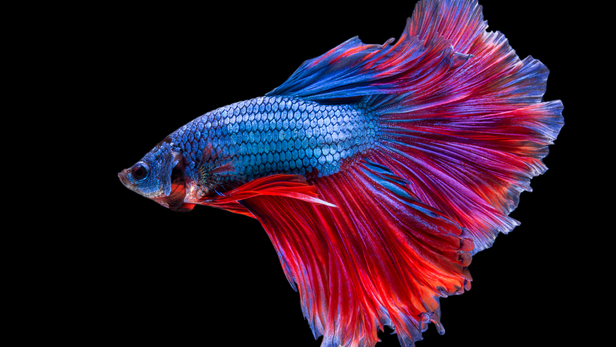
The small but striking betta is another fish capable of learning from its surroundings. Bettas can be trained to respond to simple cues and can learn to associate particular movements with feeding.
![Over time, the fish can learn that a familiar person approaching the tank often means food or interaction is coming.]() A betta may begin swimming towards the front of its aquarium when its keeper approaches, especially if that person is responsible for feeding it regularly. Over time, the fish can learn that a familiar person approaching the tank often means food or interaction is coming.
A betta may begin swimming towards the front of its aquarium when its keeper approaches, especially if that person is responsible for feeding it regularly. Over time, the fish can learn that a familiar person approaching the tank often means food or interaction is coming.
Although this should not automatically be interpreted as human-style recognition, the behaviour shows that bettas are capable of learning and remembering associations.
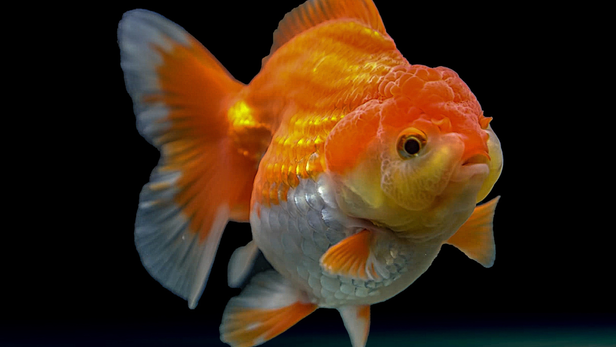
Goldfish have a reputation for having extremely short memories, but that popular belief is misleading. Studies have shown that goldfish can learn and retain information, including associations involving feeding schedules, visual cues and their environment.
With regular interaction, a goldfish can learn to approach a particular area of the tank when its keeper arrives. It may also respond to a person’s movements or feeding routine.
![its ability to learn routines demonstrates that its behaviour is far more flexible than the old “three-second memory” myth suggests.]() So while a goldfish may not greet its owner in the same way as a mammal, its ability to learn routines demonstrates that its behaviour is far more flexible than the old “three-second memory” myth suggests.
So while a goldfish may not greet its owner in the same way as a mammal, its ability to learn routines demonstrates that its behaviour is far more flexible than the old “three-second memory” myth suggests.
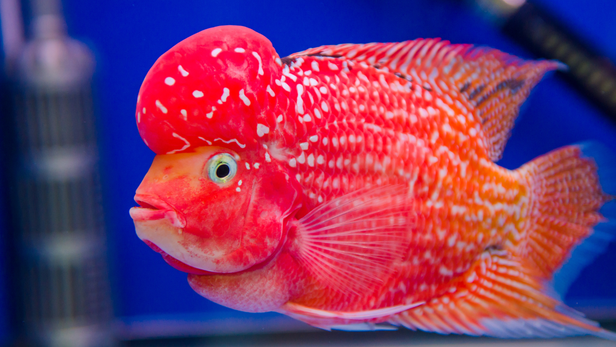
Cichlids are a large and diverse family of freshwater fish, and several species are recognised for their intelligence and complex behaviour. They can learn from their surroundings, remember feeding routines and become accustomed to individual people.
A cichlid that repeatedly sees the same person providing food may learn to approach that person or become more active when they appear. Some aquarium owners describe their fish as following them around the tank or becoming noticeably excited when they approach.
![As with other aquarium fish, this does not prove that the fish experiences human-style affection. But it does show that these animals can learn, remember and respond to familiar cues.]() As with other aquarium fish, this does not prove that the fish experiences human-style affection. But it does show that these animals can learn, remember and respond to familiar cues.
As with other aquarium fish, this does not prove that the fish experiences human-style affection. But it does show that these animals can learn, remember and respond to familiar cues.
The answer depends on what is meant by “recognise”. Scientists can demonstrate that fish are capable of distinguishing visual cues, learning associations and remembering information. In some species, such as archerfish, experiments have provided particularly strong evidence that they can distinguish individual human faces.
For other aquarium fish, what looks like recognition may involve a combination of visual familiarity, movement, sound, feeding routines and learned associations. Either way, it is a useful reminder that fish are not simply decorative animals swimming around a tank. Many are capable of surprisingly sophisticated learning, making the relationship between a fish and its keeper more interactive than it may appear.
Archerfish
Research has found that archerfish can learn to distinguish between different human faces. In experiments, they were able to identify a particular face even when presented with photographs of several different faces. This is particularly striking because human faces can appear quite similar to fish, yet archerfish can use visual features to tell them apart.
For aquarium keepers, this intelligence can also show up as the fish becoming especially attentive when a familiar person approaches the tank.
Oscars
Many Oscar keepers notice their fish swimming towards the glass when they approach, particularly around feeding time. While this behaviour may partly be learned through food association, it demonstrates that Oscars can remember patterns and connect specific people or actions with particular outcomes.
Their size, curiosity and tendency to follow movement around the aquarium can make them seem particularly responsive to their keeper.
Betta fish
Over time, the fish can learn that a familiar person approaching the tank often means food or interaction is coming.
Although this should not automatically be interpreted as human-style recognition, the behaviour shows that bettas are capable of learning and remembering associations.
Goldfish
With regular interaction, a goldfish can learn to approach a particular area of the tank when its keeper arrives. It may also respond to a person’s movements or feeding routine.
its ability to learn routines demonstrates that its behaviour is far more flexible than the old “three-second memory” myth suggests.
Cichlids
A cichlid that repeatedly sees the same person providing food may learn to approach that person or become more active when they appear. Some aquarium owners describe their fish as following them around the tank or becoming noticeably excited when they approach.
As with other aquarium fish, this does not prove that the fish experiences human-style affection. But it does show that these animals can learn, remember and respond to familiar cues.
Do fish really recognise their owners?
For other aquarium fish, what looks like recognition may involve a combination of visual familiarity, movement, sound, feeding routines and learned associations. Either way, it is a useful reminder that fish are not simply decorative animals swimming around a tank. Many are capable of surprisingly sophisticated learning, making the relationship between a fish and its keeper more interactive than it may appear.