
5 Hidden Signs Your Dog Trusts You More Than Anyone Else
Deepak Rajeev | May 14, 2026, 16:24 IST

How dogs show trust
Image credit : Freepik
This article explores 5 hidden signs that reveal your dog trusts you more than anyone else. From relaxed sleeping positions and soft eye contact to seeking comfort during stress and allowing personal space access, these subtle behaviors show deep emotional bonding. Backed by canine behavior science, it explains how dogs silently express trust through vulnerability, comfort, and attachment to their owner.
Trust is the deepest emotion a dog can show toward a human, yet it is rarely expressed in obvious ways. Unlike humans, dogs do not say “I trust you” in words or dramatic gestures. Instead, they communicate through subtle behaviors rooted in instinct, vulnerability, and emotional safety. Modern canine behavior science shows that trust is often revealed in moments when a dog chooses to let its guard down completely, even when it would normally stay alert. What makes this even more fascinating is that many dog owners miss these signals entirely, mistaking them for ordinary habits. But when observed closely, these small behaviors reveal something powerful: your dog sees you as a safe place in the world.
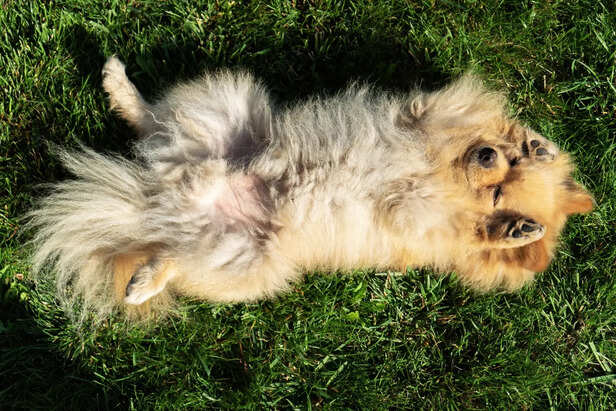
![Sleep Position]() One of the strongest hidden signs of trust is how a dog sleeps in your presence. In the wild, dogs only enter deep sleep when they feel completely safe, because sleep is a vulnerable state where survival instincts are lowered. When your dog sleeps on its back, with paws relaxed or belly exposed, it is showing a level of comfort that only exists in environments it considers secure. Veterinary behavior specialists often note that dogs instinctively choose sleeping positions based on perceived safety. If a dog consistently sleeps near you or in the same room, especially in relaxed postures, it indicates that your presence reduces its need for constant alertness. This is not just comfort. It is psychological safety built on trust.
One of the strongest hidden signs of trust is how a dog sleeps in your presence. In the wild, dogs only enter deep sleep when they feel completely safe, because sleep is a vulnerable state where survival instincts are lowered. When your dog sleeps on its back, with paws relaxed or belly exposed, it is showing a level of comfort that only exists in environments it considers secure. Veterinary behavior specialists often note that dogs instinctively choose sleeping positions based on perceived safety. If a dog consistently sleeps near you or in the same room, especially in relaxed postures, it indicates that your presence reduces its need for constant alertness. This is not just comfort. It is psychological safety built on trust.
In multi-dog environments, this behavior becomes even more meaningful. Dogs tend to choose the most trusted figure in the household as their “rest anchor,” often positioning themselves where they can relax without fear of threat.
In canine body language, the back and neck are among the most vulnerable areas. Wild instincts teach dogs to protect these regions at all times. When a dog willingly turns its back to you or allows you to approach its neck without tension, it is demonstrating a powerful form of trust.
Behavior researchers explain that this action is not random. It reflects an internal belief that no harm will come from the person nearby. Even in play, dogs that trust their owners may roll over or turn away while remaining completely relaxed. Real-world veterinary observations show that anxious or poorly socialized dogs rarely expose these areas voluntarily. Instead, they remain stiff, alert, or ready to move away. A calm, unguarded posture is one of the clearest indicators that the dog feels emotionally safe.
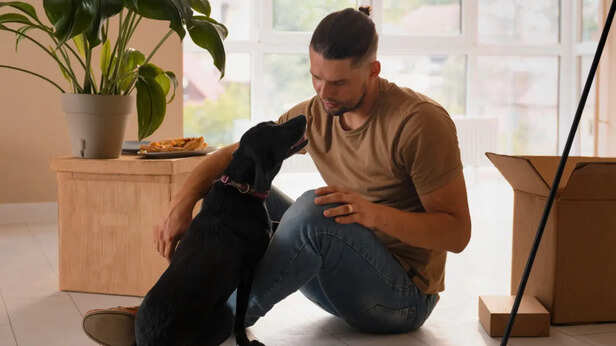
![Dog Chooses You During Moments of Stress or Uncertainty]() Another deeply revealing sign of trust is how a dog behaves during stress. Loud noises, unfamiliar environments, or sudden changes often trigger anxiety in dogs. In such moments, a dog that trusts its owner will instinctively move closer rather than withdraw. This behavior is rooted in attachment theory in animal psychology. Dogs form emotional bonds similar to human-child caregiver relationships. When they feel unsafe, they seek proximity to the individual they associate with protection and stability.
Another deeply revealing sign of trust is how a dog behaves during stress. Loud noises, unfamiliar environments, or sudden changes often trigger anxiety in dogs. In such moments, a dog that trusts its owner will instinctively move closer rather than withdraw. This behavior is rooted in attachment theory in animal psychology. Dogs form emotional bonds similar to human-child caregiver relationships. When they feel unsafe, they seek proximity to the individual they associate with protection and stability.
Many owners notice this during thunderstorms, fireworks, or crowded environments. The dog may stay close, follow quietly, or maintain physical contact such as leaning or sitting nearby. This is not dependency in a negative sense. It is emotional reliance built on trust.
Eye contact in dogs is complex. In unfamiliar or uncertain relationships, direct staring can feel threatening or uncomfortable. However, in trusted relationships, eye contact becomes soft, relaxed, and brief, often accompanied by blinking or gentle facial expressions.
Scientific studies in canine cognition suggest that mutual gaze between dogs and humans can increase oxytocin levels, the same hormone associated with bonding and emotional connection. This biochemical response strengthens trust over time. When your dog looks at you calmly without tension or avoidance, it is not simply observing you. It is engaging in a form of emotional communication that signals comfort and acceptance. Many researchers compare this behavior to silent reassurance between bonded individuals.
5. Your Dog Lets You Interrupt Its Guarding Instincts
Dogs naturally guard resources such as food, toys, resting areas, and personal space. This is an ancient survival instinct inherited from their evolutionary past. However, when a dog fully trusts a human, this guarding behavior becomes relaxed or even absent.
One of the strongest hidden signs of trust is when a dog allows you to approach its food, move its belongings, or enter its personal space without showing defensive behavior. In some cases, dogs may even voluntarily share space or objects. Animal behavior experts emphasize that this level of comfort is not automatic. It is built over time through consistent positive experiences. A dog that does not feel the need to defend itself from its owner has reached a high level of emotional security.
One of the most important discoveries in modern canine behavior science is that trust in dogs is rarely dramatic. It does not appear in loud actions or obvious displays. Instead, it is found in quiet moments where the dog chooses relaxation over alertness, closeness over distance, and vulnerability over protection. From deep sleep positions to soft eye contact and relaxed guarding instincts, each behavior reflects a simple truth: your dog is not just comfortable around you, it considers you part of its safe world. In the end, trust is not something dogs announce. It is something they quietly live every day in the small moments most humans overlook.
Celebrate the bond with your pets, explore Health & Nutrition, discover Breeds, master Training Tips, Behavior Decoder, and set out on exciting Travel Tails with Times Pets!
1. Your Dog Sleeps in Deep, Exposed Positions Around You
Sleep Position
In multi-dog environments, this behavior becomes even more meaningful. Dogs tend to choose the most trusted figure in the household as their “rest anchor,” often positioning themselves where they can relax without fear of threat.
2. Your Dog Exposes Its Back or Neck Without Hesitation
In canine body language, the back and neck are among the most vulnerable areas. Wild instincts teach dogs to protect these regions at all times. When a dog willingly turns its back to you or allows you to approach its neck without tension, it is demonstrating a powerful form of trust.
Behavior researchers explain that this action is not random. It reflects an internal belief that no harm will come from the person nearby. Even in play, dogs that trust their owners may roll over or turn away while remaining completely relaxed. Real-world veterinary observations show that anxious or poorly socialized dogs rarely expose these areas voluntarily. Instead, they remain stiff, alert, or ready to move away. A calm, unguarded posture is one of the clearest indicators that the dog feels emotionally safe.
3. Your Dog Chooses You During Moments of Stress or Uncertainty
Dog Chooses You During Moments of Stress or Uncertainty
Image credit : Freepik
Many owners notice this during thunderstorms, fireworks, or crowded environments. The dog may stay close, follow quietly, or maintain physical contact such as leaning or sitting nearby. This is not dependency in a negative sense. It is emotional reliance built on trust.
4. Your Dog Maintains Soft Eye Contact Without Tension
Eye contact in dogs is complex. In unfamiliar or uncertain relationships, direct staring can feel threatening or uncomfortable. However, in trusted relationships, eye contact becomes soft, relaxed, and brief, often accompanied by blinking or gentle facial expressions.
Scientific studies in canine cognition suggest that mutual gaze between dogs and humans can increase oxytocin levels, the same hormone associated with bonding and emotional connection. This biochemical response strengthens trust over time. When your dog looks at you calmly without tension or avoidance, it is not simply observing you. It is engaging in a form of emotional communication that signals comfort and acceptance. Many researchers compare this behavior to silent reassurance between bonded individuals.
5. Your Dog Lets You Interrupt Its Guarding Instincts
Dogs naturally guard resources such as food, toys, resting areas, and personal space. This is an ancient survival instinct inherited from their evolutionary past. However, when a dog fully trusts a human, this guarding behavior becomes relaxed or even absent.
One of the strongest hidden signs of trust is when a dog allows you to approach its food, move its belongings, or enter its personal space without showing defensive behavior. In some cases, dogs may even voluntarily share space or objects. Animal behavior experts emphasize that this level of comfort is not automatic. It is built over time through consistent positive experiences. A dog that does not feel the need to defend itself from its owner has reached a high level of emotional security.
Final Insight: Trust Is Quiet, Not Loud
One of the most important discoveries in modern canine behavior science is that trust in dogs is rarely dramatic. It does not appear in loud actions or obvious displays. Instead, it is found in quiet moments where the dog chooses relaxation over alertness, closeness over distance, and vulnerability over protection. From deep sleep positions to soft eye contact and relaxed guarding instincts, each behavior reflects a simple truth: your dog is not just comfortable around you, it considers you part of its safe world. In the end, trust is not something dogs announce. It is something they quietly live every day in the small moments most humans overlook.
Celebrate the bond with your pets, explore Health & Nutrition, discover Breeds, master Training Tips, Behavior Decoder, and set out on exciting Travel Tails with Times Pets!